
Welcome to SD Electric Power Equipment Co., Ltd.
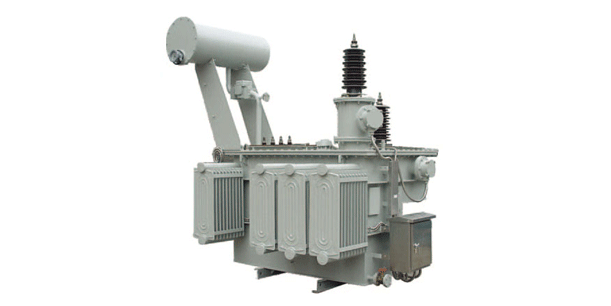
220KV series oil immersed power transformer produced with global advanced technology and equipment, continuously updating the manufacturing experience and processing. We developed high-grade power transformer that sufficiently satisfy the operation conditions of domestic and foreign power grid.
‹
›
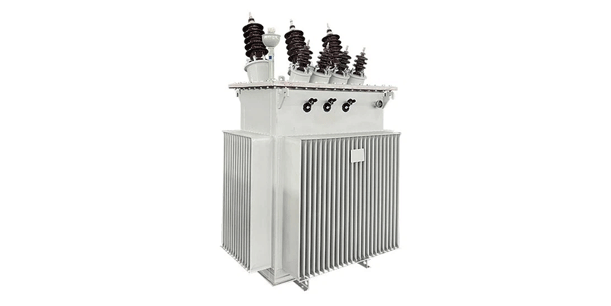
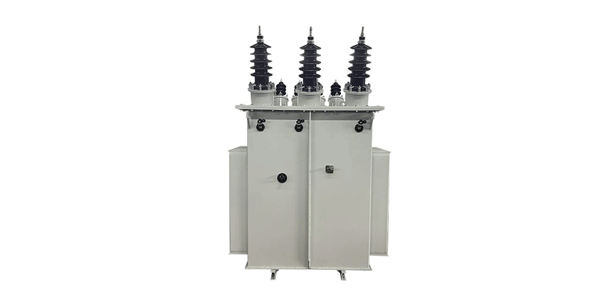
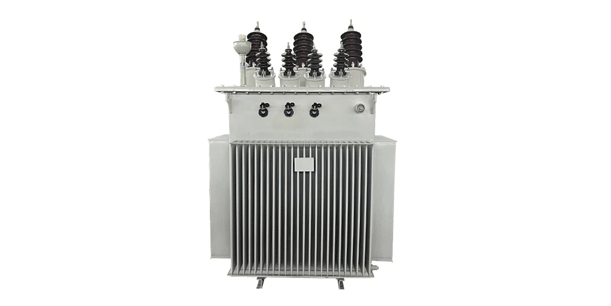
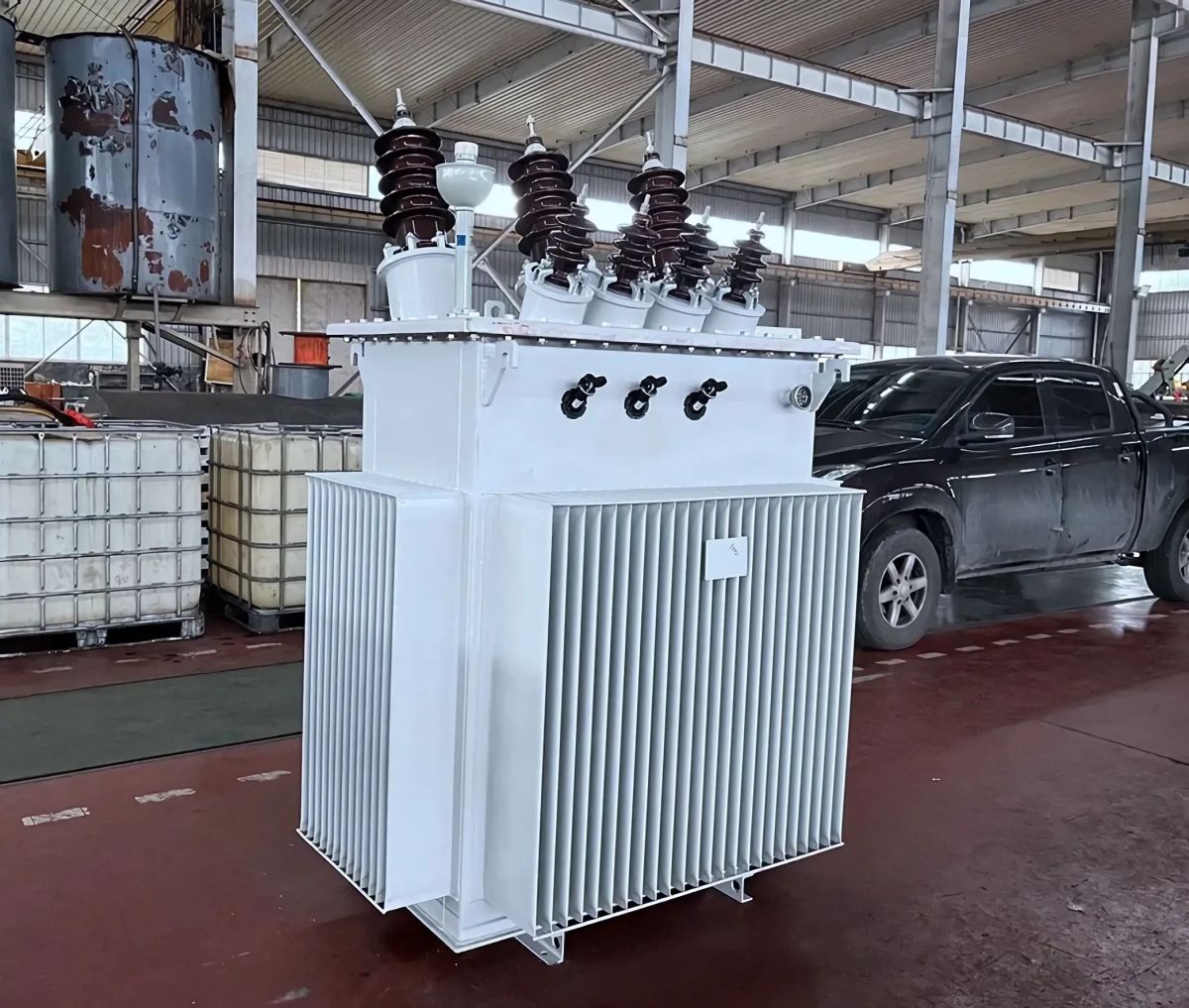
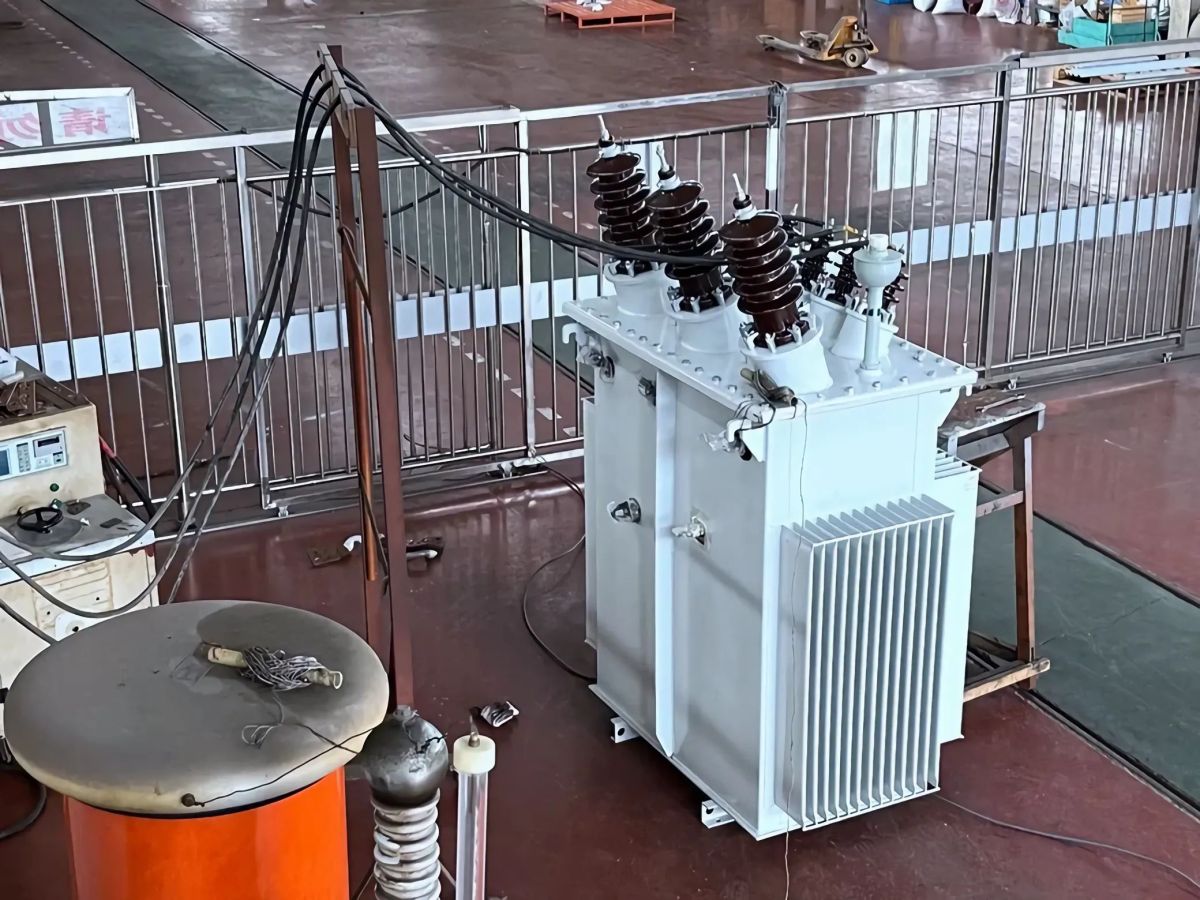
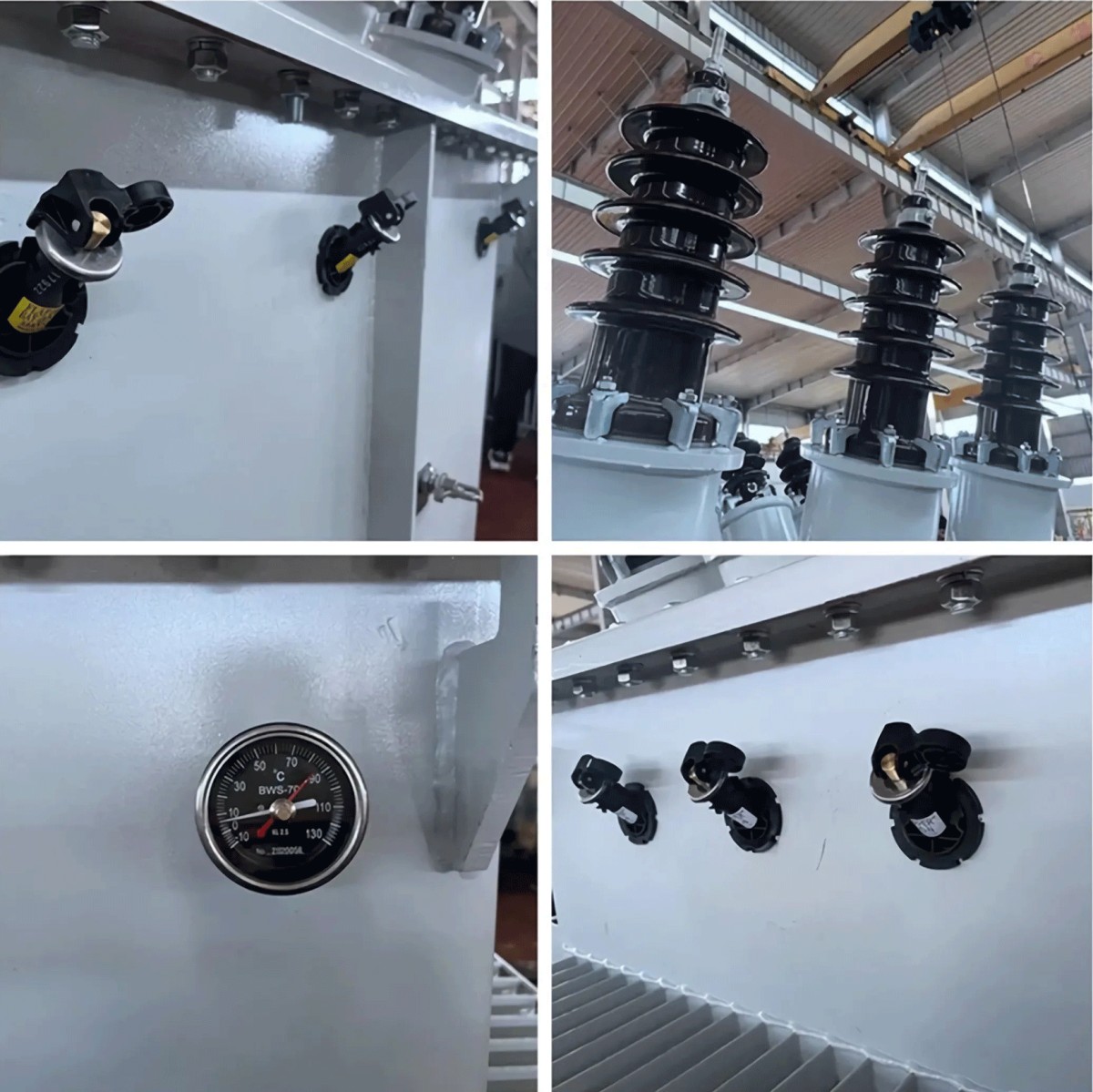
The primary voltage and secondary voltage of the transformer are 33/6.6kV. The transformer is equipped with high and low voltage fuses for better protection. Because of the fuse, the height of the transformer is much higher than that of the ordinary transformer. In addition, the transformer high and low voltage bushings are tilted at a 45° Angle to better connect the overhead cables. The 500kVA power transformer was designed with advanced technology and adopts high quality material and components which result in reliable quality and long operation time.
Scope of Supply
Product: Oil Immersed Power Transformer
Rated Power: Up to 200 MVA
Primary Voltage: Up to 230
Technical Specification
500kVA power transformer specification and data sheet
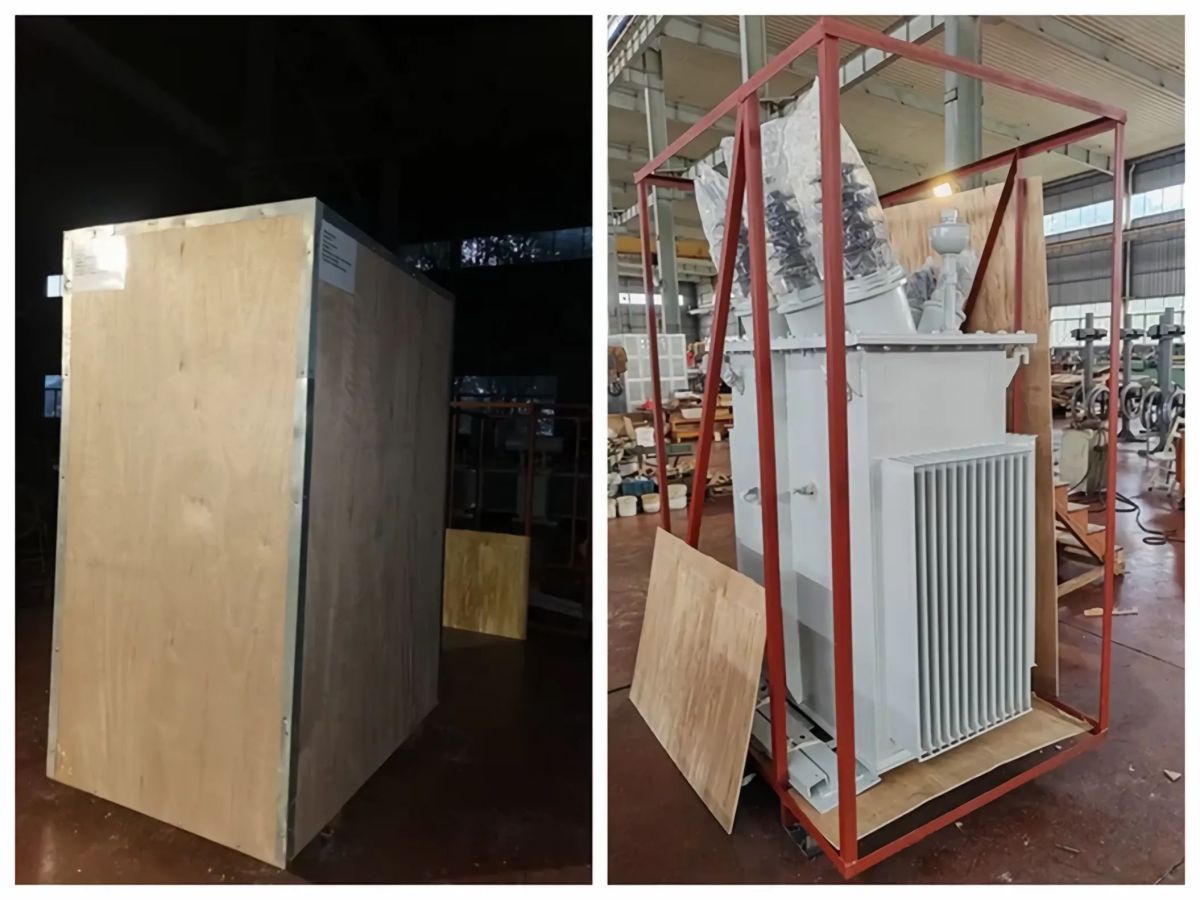
Detail presentation
How to Choose the High and Low Voltage Fuses for Transformers
When it comes to selecting the high and low voltage fuses for transformers, there are several factors to consider. These fuses play a critical role in ensuring the safe and reliable operation of transformers, which are used to step up or step down the voltage of electrical power.
Here are some key factors to consider when choosing the high and low voltage fuses for transformers:
1. Voltage Rating: The first and most important factor to consider is the voltage rating of the fuse. Make sure to choose a fuse with a voltage rating that matches the transformer's voltage rating to ensure optimal performance and safety.
2. Current Rating: Another critical factor to consider is the current rating of the fuse. Choose a fuse with a current rating that is suitable for the expected load of the transformer to prevent overloading and damage to the fuse.
3. Fuse Type: There are several types of fuses available, including cartridge fuses, blade fuses, and DIN fuses. Choose the type of fuse that is most appropriate for the transformer's design and application.
4. Breaking Capacity: The breaking capacity of a fuse refers to its ability to interrupt a fault current. Make sure to choose a fuse with a breaking capacity that exceeds the maximum expected fault current to ensure reliable operation and safety.
5. Time-Current Characteristics: The time-current characteristics of a fuse refer to its response time to different levels of fault current. Choose a fuse with time-current characteristics that are appropriate for the transformer's application and protection requirements.
6. Backup Protection: In some cases, it may be necessary to provide backup protection for the transformer in the form of a secondary fuse or circuit breaker. Make sure to choose backup protection that is compatible with the main fuse and provides the necessary level of protection.
In conclusion, selecting the high and low voltage fuses for transformers requires careful consideration of several factors. By taking the time to properly evaluate these factors, you can choose the right fuses for your transformer and ensure safe and reliable operation.
RELEVANT RECOMMENDATION
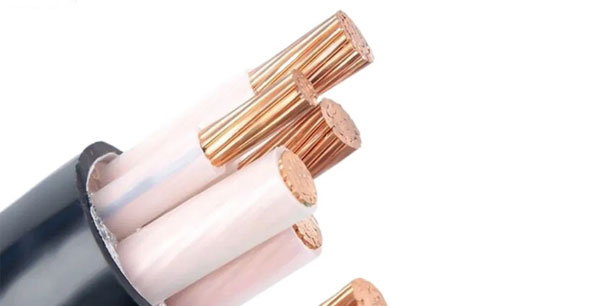
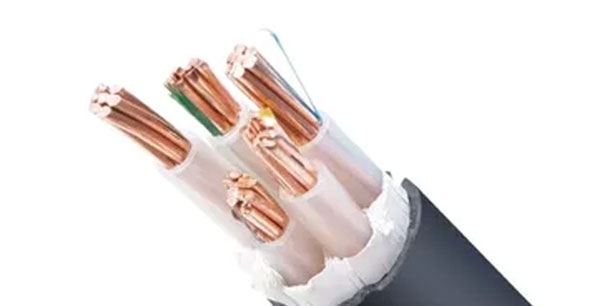
 22 kilovolts, aluminum/copper core, polyvinyl chloride/ cross-linked polyethylene insulation, low-voltage/high-voltage power/electrical cablePVC insulated power cable is suitable for laying fixed in power transmission and distribution lines with A.C. 50HZ and rated voltage of 0.6/1kV.
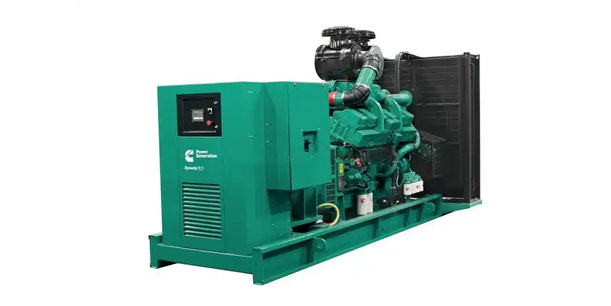
XLPE insulated power cable has a number of advantages compared with paper insulated and PVC insulated cables. XLPE cable has high electric property, mechanical property, heat aging performance, environmental stress crack resistance, chemical corrosion resistance, and it also has simple structure, convenient operation and it is not restricted by laying in large difference of level. It can be applied in high temperature of 90 degree for a long time. 220KW Cummins diesel generator setBrand Endorsement: Dongfeng Cummins, as a joint venture brand, boasts mature engine technology, comprehensive global warranty service, and high parts interchangeability.
Compact Structure: Compared to higher-powered models, the JHK-24GF is compact and lightweight, facilitating transportation, installation, and relocation.
Easy Maintenance: Designed with ease of maintenance in mind, the filter and oil filler are conveniently located, simplifying routine maintenance.
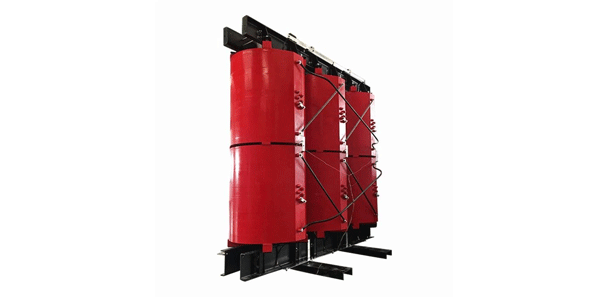
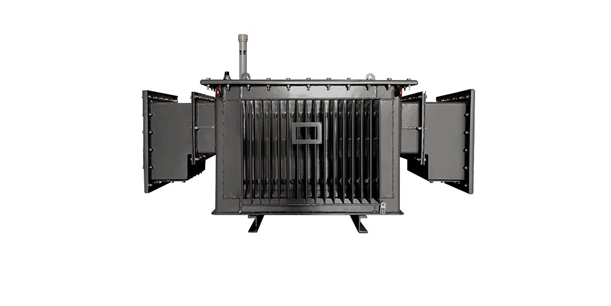
Strong Environmental Adaptability: Capable of stable starting in ambient temperatures ranging from -15°C to 40°C (equipped with a preheating device), suitable for various climatic conditions. 2840 KVA 12.47/0.6KV Dry Type Traction Power Rectifier TransformerThis transformer feed a diode rectifier, 6 phase, 12 pulses, which feeds the load with DC voltage 750v, the rectifier is not equipped with smoothing or interphase coil on 750v side, we are responsible of the compatibility of the transformer-rectifier system. The K factor of the transformer is K13, which means the transformer is operating in a heavy harmonic environmental, which is considered by us during design. The transformer is working 20/24 hour, 365 days at -35 to +40 ℃ and 100% humidity. The transformer is able to work at 150% of the rated power with peak of 300% for 20seconds due to peak of voltage every 3 minute without exceeding the temperature of 100℃,the temperature rise is 80℃ max at rated power, the insulation of the copper winding is adopt NOMEX with class H(220℃)
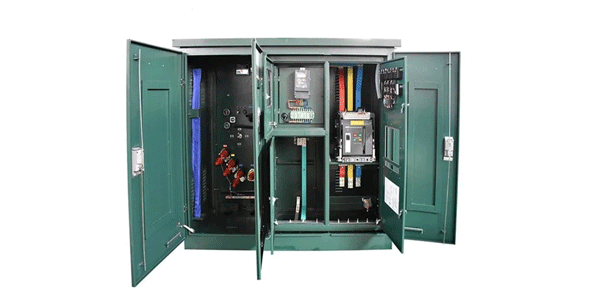
 Pad Mounted Transformer 13.8kV IEEE StandardsThe rated power of the transformer is 750 kVA with ONAN cooling. The primary voltage is 13.8kV with ±2*2.5% tapping range (NLTC), the secondary voltage is 0.4kV, they formed a vector group of Dyn11.
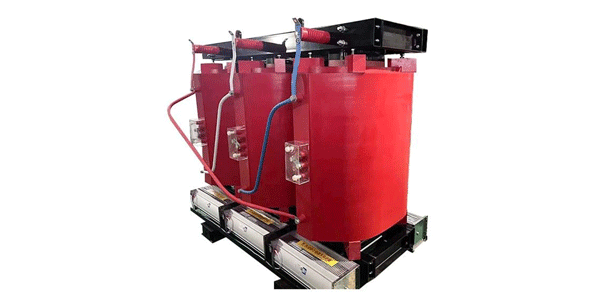
 5000 KVA 22 KV Epoxy Resin Cast Dry Type TransformerThe 5000kVA transformers will each be supplying 3x compressors with 790kW motors which are started Direct-on-Line (D.O.L). The intention is for the 5000kVA transformer to accommodate 2x 790kW motors starting simultaneously D.O.L with the third starting some time after.The HV and LV cables are bottom entry, an 800 * 400mm opening is provided on the bottom of the enclosure for HV cable incoming, an 400*400mm opening is provided on the bottom of enclosure for LV cable incoming. Which is sealed with temporary low-carbon steel plate.The shock proof rubber pad is installed at the bottom of the transformer, which has excellent isolation effect and can reduce the impact of live load and seismic force on the transformer. There are three surge arresters installed on the enclosure and connected to the each phase of HV terminal.The transformer is equipped with no load tap changer, the tapping range is ±2*2.5% at primary side.The cooling is AN,but client is request to add additional fans,which means can add the capacity of transformer. The connect group is Dyn11.
 200 KVA Power Distribution TransformerThe rated power of the transformer is 200 kVA with ONAN cooling, the primary voltage is 0.525/0.55 kV with ±2*2.5% tapping range (NLTC), the secondary voltage is 0.38 kV, they formed a vector group of Yyn0.
 25 MVA 25000 KVA Substation Step Down Power TransformerThese substation step down transformers were designed with ABB OLTC and equipped with AVR.
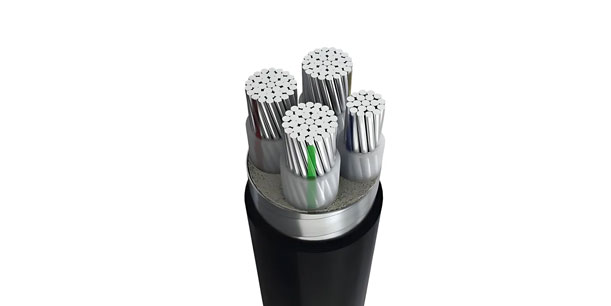
 15kv kilovolts, aluminum/copper core, polyvinyl chloride/ cross-linked polyethylene insulation, low-voltage/high-voltage power/electrical cablePVC insulated power cable is suitable for laying fixed in power transmission and distribution lines with A.C. 50HZ and rated voltage of 0.6/1kV.
XLPE insulated power cable has a number of advantages compared with paper insulated and PVC insulated cables. XLPE cable has high electric property, mechanical property, heat aging performance, environmental stress crack resistance, chemical corrosion resistance, and it also has simple structure, convenient operation and it is not restricted by laying in large difference of level. It can be applied in high temperature of 90 degree for a long time. 11kv kilovolts, aluminum/copper core, polyvinyl chloride/ cross-linked polyethylene insulation, low-voltage/high-voltage power/electrical cablePVC insulated power cable is suitable for laying fixed in power transmission and distribution lines with A.C. 50HZ and rated voltage of 0.6/1kV.
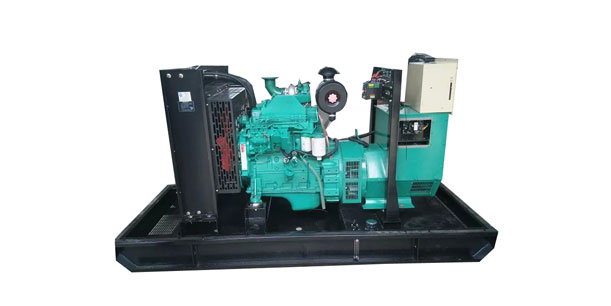
XLPE insulated power cable has a number of advantages compared with paper insulated and PVC insulated cables. XLPE cable has high electric property, mechanical property, heat aging performance, environmental stress crack resistance, chemical corrosion resistance, and it also has simple structure, convenient operation and it is not restricted by laying in large difference of level. It can be applied in high temperature of 90 degree for a long time. 30KW Cummins diesel generator setBrand Endorsement: Dongfeng Cummins, as a joint venture brand, boasts mature engine technology, comprehensive global warranty service, and high parts interchangeability.
Compact Structure: Compared to higher-powered models, the JHK-24GF is compact and lightweight, facilitating transportation, installation, and relocation.
Easy Maintenance: Designed with ease of maintenance in mind, the filter and oil filler are conveniently located, simplifying routine maintenance.
Strong Environmental Adaptability: Capable of stable starting in ambient temperatures ranging from -15°C to 40°C (equipped with a preheating device), suitable for various climatic conditions.
ONLINE CONSULTATION
Please give us a message
CONTACT US